
Private Hernia Treatment In Milton Keynes
A hernia is an abnormal protrusion of your intestine or another internal organ through a weakened section of your abdominal wall. A natural weakening of your abdominal wall typically causes hernias, but physical strain can make them worse.
Most of the time, hernias appear in the crease of your groin or near your upper thigh, but they can also be found near your navel and other abdominal areas.

Why receiving timely hernia treatment is essential
Mainly, hernias are uncomfortable but do not pose an immediate health risk. However, they will not get better on their own, and if not operated on, they can enlarge and lead to severe, potentially life-threatening complications.
If a hernia becomes trapped in your abdominal wall and cuts off its own blood supply (known as strangulation), it can lead to critical complications within a matter of hours if left untreated. Doctors almost always recommend surgery to reinforce the weak area before severe pain or progression occurs.
The types of hernia we treat include:
- Inguinal hernias: Where fatty tissue or part of your bowel pokes into your groin near your upper inner thigh.
- Femoral hernias: Similar to inguinal hernias but presenting lower down into the upper part of the thigh.
- Umbilical hernias: Fatty tissue or bowel bulging through a weak spot near the belly button (navel).
- Hiatus hernias: Occurs when part of your stomach pushes upwards into your chest cavity through your diaphragm.
- Incisional hernias: Arising through a weak spot formed by a previous surgical incision or scar tissue.
Common signs requiring surgery include an enlargement of the lump, progressive pain when coughing or straining, or a heavy feeling of bloating and fullness.
What happens during hernia surgery?
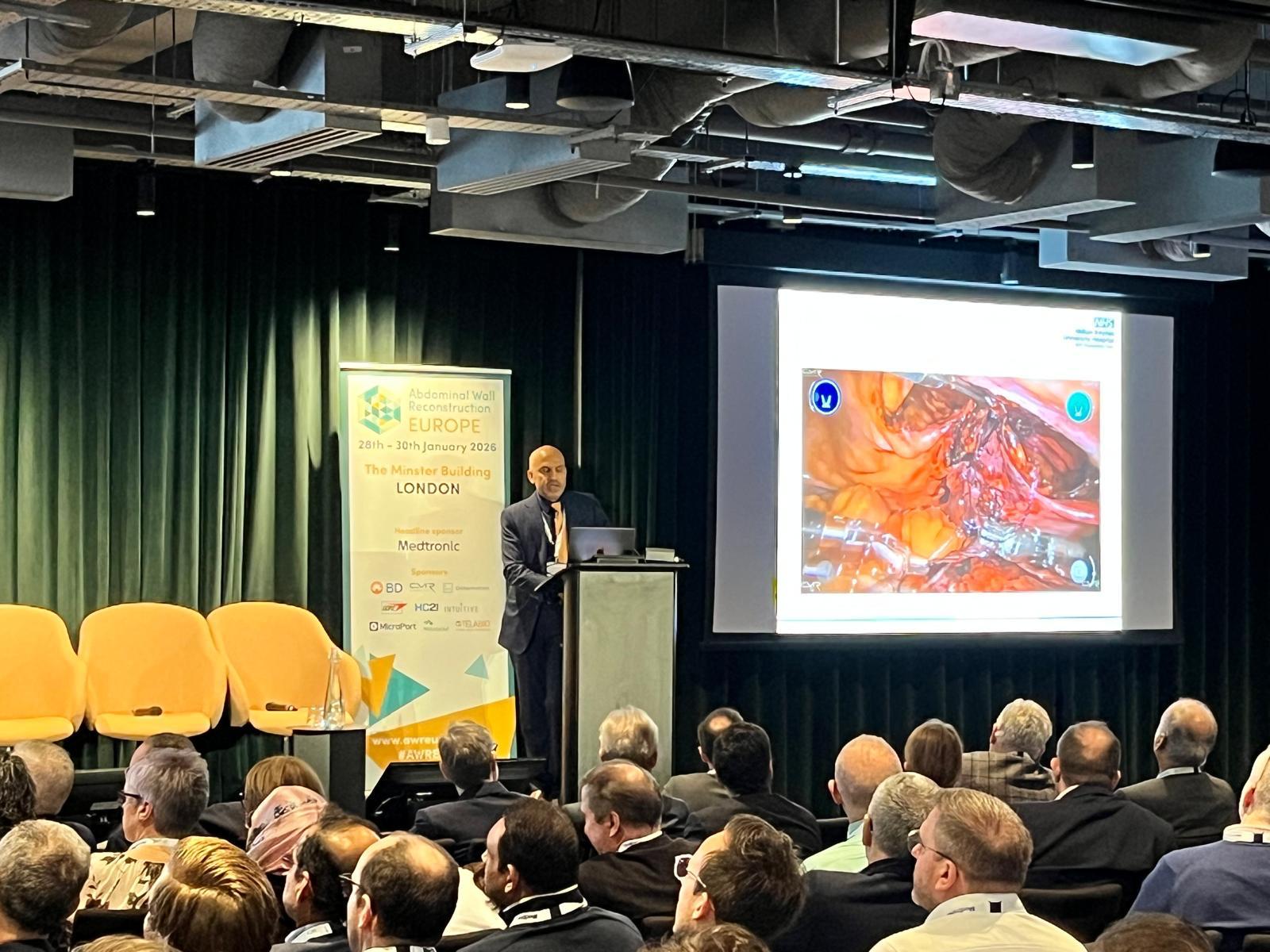
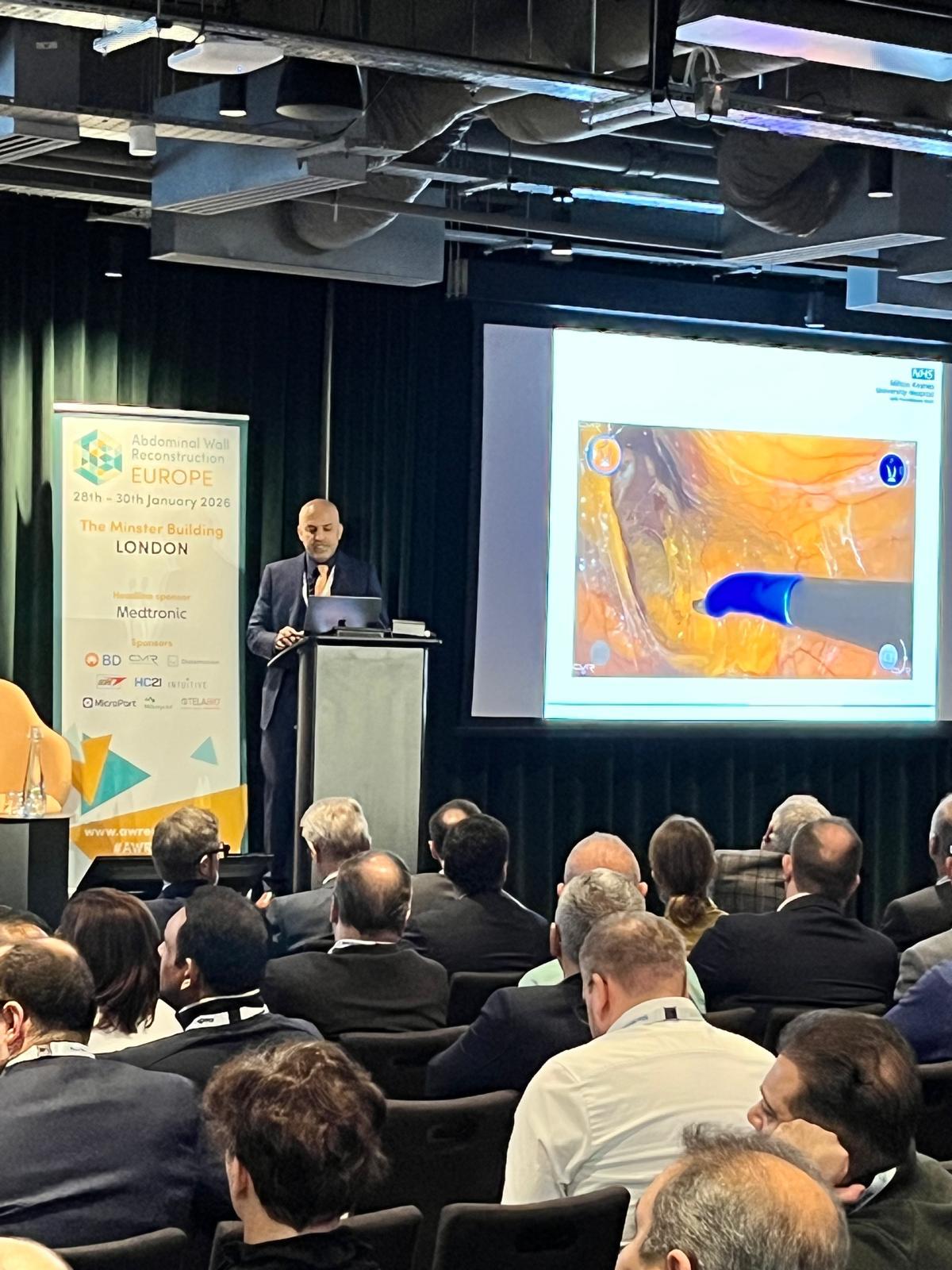
The only definitive way to treat a hernia is with surgery. Surgeons use a medical-grade mesh to reinforce your weakened abdominal wall and gently move any protruding organs back to their correct anatomical position.
Mr Achal Khanna uses advanced, minimally invasive techniques to perform hernia repairs at our clinic in Milton Keynes:
Laparoscopic hernia surgery: Keyhole surgery where small incisions (ports) are made into your abdomen to insert a miniature camera and instruments. This leaves minimal scarring and provides an enhanced recovery time.
Robotic-assisted hernia surgery: Utilizing precision robotic arms fitted with surgical tools. The surgeon sits at a high-definition remote console right beside you, completely controlling every micro-movement with superior visibility.
